Unlocking the Private Sector: The Total Market Approach
Project Profile: USAID ZAM-Health
1. Project Data (Sidebar/Header)
- Full Title: USAID Zambia Accessible Markets for Health (ZAM-Health)
- Donor: USAID | PEPFAR
- Duration: June 2021 – June 2026
- Geography: Lusaka, Copperbelt, Central, Southern, and North-Western Provinces
- Prime/Partner Role: Consortium Partner (Technical Lead for Private Sector Engagement)
- Consortium Partners: John Snow Health (JSH), JSI, Media 365, PharmAccess, Mopani Copper Mines
2. Overall Objective
The overarching goal of USAID ZAM-Health is to significantly improve health outcomes for Zambians by expanding the availability and accessibility of high-quality health products and services in the private sector.
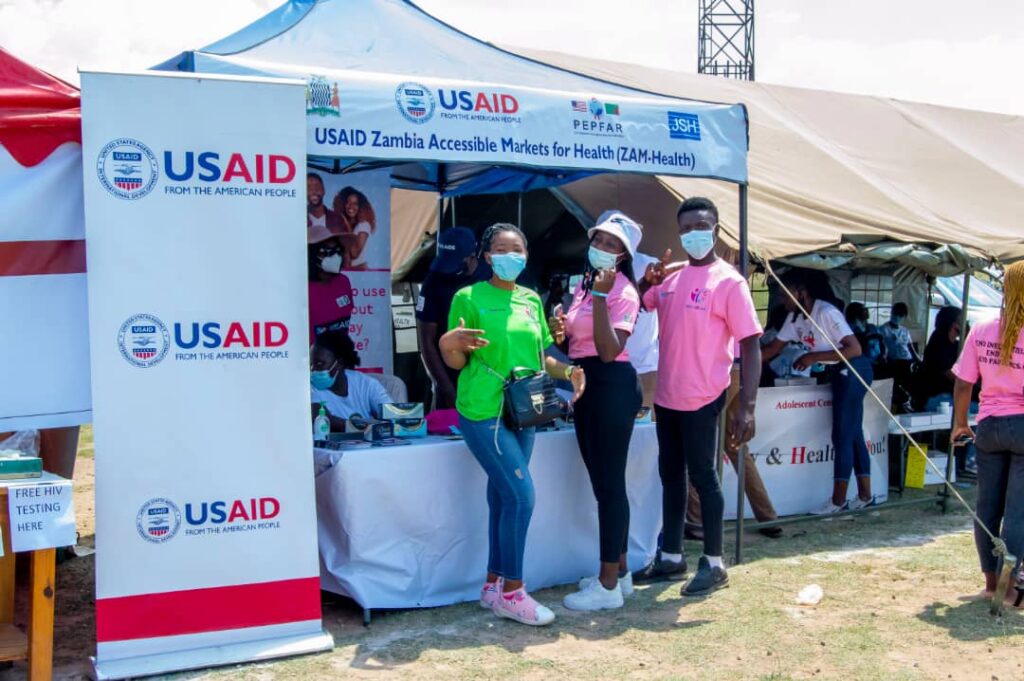
As Zambia’s population grows, the public health sector faces increasing pressure, leading to overcrowding and resource constraints. ZAM-Health acts as a market facilitator, utilizing the Total Market Approach (TMA) to coordinate public, commercial, and NGO sectors. The objective is to shift clients with the financial means to pay for services towards the private sector, thereby decongesting public facilities and ensuring government resources are reserved for the most vulnerable populations.
3. The Strategy: Unlocking the Private Sector
Our strategy is built on the premise that the private sector is an untapped engine for national health security. By formalizing and empowering private providers, we create a sustainable health ecosystem that relies less on donor funding and more on market dynamics.
The Private Sector Player (Role of CHZ) As a technical lead, Coalition Health Zambia (CHZ) works directly with private entities, ranging from small neighborhood drug shops to large corporate hospitals, to integrate them into the national health response. We treat these facilities not as competitors to the government, but as partners in service delivery.
Support to the Health Care Federation of Zambia (HCFZ) A critical component of our sustainability strategy is institutional capacity building. We provide direct technical and operational support to the Health Care Federation of Zambia (HCFZ).
- Advocacy: We strengthen HCFZ’s ability to advocate for favorable tax policies and regulatory reforms that lower the cost of doing business for private health providers.
- Coordination: We help HCFZ organize the fragmented private sector into a unified voice, enabling more effective dialogue with the Ministry of Health and the National Health Insurance Management Authority (NHIMA).
4. Key Activities & Implementation Pillars
A. Clinical Aspect
We have moved beyond simple commodity distribution to full clinical service provision. ZAM-Health actively upgrades the clinical capacity of private facilities to offer complex medical services that were previously the domain of public hospitals.
- ART Authorization: We successfully accredited private clinics and pharmacies to dispense Antiretroviral Therapy (ART). This allows stable HIV patients to collect medication discreetly and quickly from private outlets.
- Quality Assurance: We deploy technical teams to train private doctors, nurses, and pharmacists in national treatment guidelines. This ensures that a patient receiving malaria treatment or HIV counselling at a private clinic receives the same standard of care as they would in a government hospital.
- HMIS Integration: A historic achievement of the project is the integration of private sector data into the national Health Management Information System (HMIS). This ensures that every test conducted and every pill dispensed in the private sector is counted in national statistics.
B. Service Delivery & Supply Chain
- Last Mile Availability: We connected private pharmacies to the national supply chain for specific subsidized commodities. This ensures that essential products like Family Planning (FP) injectables and PrEP are consistently available on private shelves.
- Social Franchising: To build consumer trust, we established a branded network of accredited private providers. The project “Seal of Quality” gives clients the confidence to pay for services, knowing they are safe and effective.
C. Social & Behavioural Change (SBC)
Supply is nothing without demand. Our SBC unit works to drive traffic from the community into these accredited private facilities.
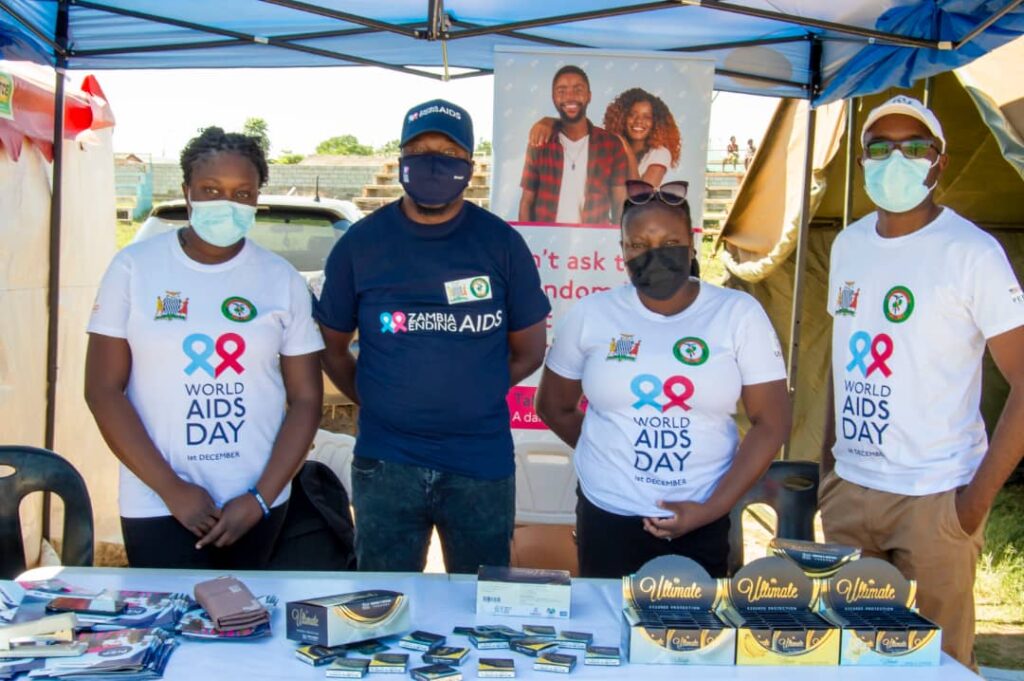
- “Ni Zii!” Campaign: Through targeted mass media and digital campaigns, we normalized the use of condoms and PrEP among urban youth, positioning private pharmacies as “judgement-free” zones.
- Adolescent Wellness Days: We organize community-level events where young people can access sexual reproductive health information in a fun, non-clinical environment, bridging the gap between awareness and action.
5. Key Outcomes (The Results)
- 13.6 Million Condoms Distributed: Through our private channel partners, we achieved massive scale in HIV prevention, proving that the private sector can move high volumes of commodities efficiently.
- ART Decongestion: By transitioning over 10,000+ stable clients to private care, we have significantly reduced waiting times at high-volume public clinics in Lusaka and Kitwe.
- Family Planning Uptake: We recorded a 25% increase in the uptake of long-acting reversible contraceptives (LARCs) in supported private facilities, demonstrating that women are willing to pay for convenience and privacy.
- ntegrated Care: Beyond HIV, we expanded service delivery to include Cervical Cancer Screening and TB/HIV integration, ensuring a one-stop-shop model for patients in the private sector.
- Innovation Readiness: Piloted distribution models for next-generation prevention tools, establishing the supply chain protocols necessary for Long-Acting Injectable PrEP (Lenacapavir) rollout.
6. The “So What?” (Overall Impact)
Why does this matter? The USAID ZAM-Health project is proving that sustainability is possible. By demonstrating that health services can be a profitable business line, we are motivating private facilities to keep investing in their own capacity.
We are building a future where a Zambian citizen has a genuine choice: to visit a free government clinic or to pay an affordable fee at a high-quality private pharmacy. This choice creates a more resilient health system, capable of withstanding future shocks and delivering Universal Health Coverage without sole reliance on donor aid.