In the fight against HIV/AIDS, the greatest barrier is often not the lack of medicine, but the lack of access. In many of Zambia’s rural districts, deep-seated cultural stigma creates an invisible wall between the community and the clinic. For Key Populations (KPs) and adolescents, the fear of judgment often outweighs the fear of illness, leading many to avoid testing and treatment services entirely.
For Coalition Health Zambia (CHZ), the solution to this challenge lay not in building more clinics, but in building bridges with the custodians of culture: Traditional Leadership.
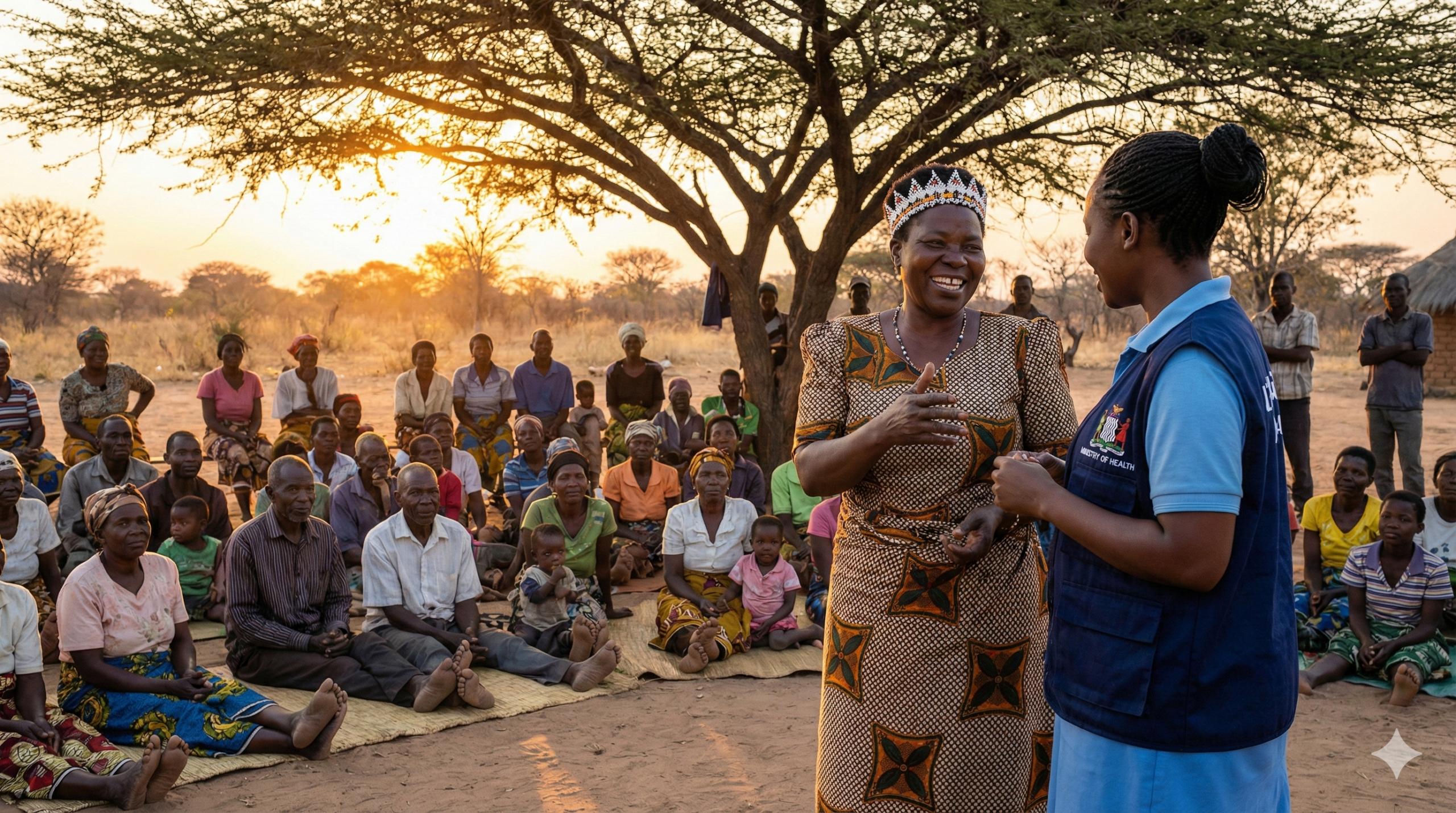
The Strategy: From Gatekeepers to Champions Under the USAID CHEKUP II project, CHZ recognized that traditional leaders are the most influential voices in their communities. We shifted our strategy from a “facility-based” model to a “community-led” approach. A pivotal moment in this strategy was our partnership with influential figures such as Chieftainess Nawaitwika.
Rather than bypassing traditional structures, CHZ engaged the Chieftainess directly, presenting health data not just as a medical issue, but as a community preservation issue. By securing her buy-in, we transformed a potential barrier into our strongest asset. The Chieftainess became a champion for health, sanctioning the presence of mobile clinics and encouraging her subjects to seek care without fear.
Creating Safe Zones This high-level endorsement allowed CHZ to operationalize mobile clinics in areas that were previously difficult to penetrate. To ensure sustainability, we trained 78 Key Population leaders to act as peer navigators, bridges between the traditional community and the biomedical health system.
We also implemented a series of stigma-reduction workshops designed to dismantle the social barriers that drive the epidemic. These sessions provided a platform for open dialogue, reaching 1,950 Key Populations and 830 general community members.
Holistic Impact The result was the creation of “safe zones” where health services could be accessed openly. Furthermore, recognizing that poverty drives HIV risk, we integrated economic empowerment into our health programming. We collaborated with private sector entities like ZESCO and COMACO to offer vocational training and internships. By combining the social authority of traditional leaders with the economic opportunities of the private sector, CHZ has created a model for rural health resilience that goes far beyond the clinic walls.
Strategic Focus: Discover how Coalition Health Zambia strengthens national capacity through our Health Systems & Supply Chain and Indigenous Prime Partnership.