The Gap in Care Despite years of progress in the fight against HIV, one demographic remains disproportionately vulnerable in Zambia: adolescent girls and young women (AGYW). The statistics tell a worrying story of new infections rising in this group even as they stabilize in others.
The challenge is often access. For a nineteen-year-old woman in a rural community, the local clinic can feel like a hostile environment. She may fear judgment from older health workers, worry about her privacy, or simply lack the information needed to make empowered decisions about her reproductive health. The traditional “clinic-first” model was failing to reach the people who needed it most.
The Mentor Mother Model Under the USAID CHEKUP II mandate, Coalition Health Zambia adopted a different approach. We recognized that the messenger matters just as much as the medicine. If young women were afraid to come to the clinic, we would bring the health system to them.
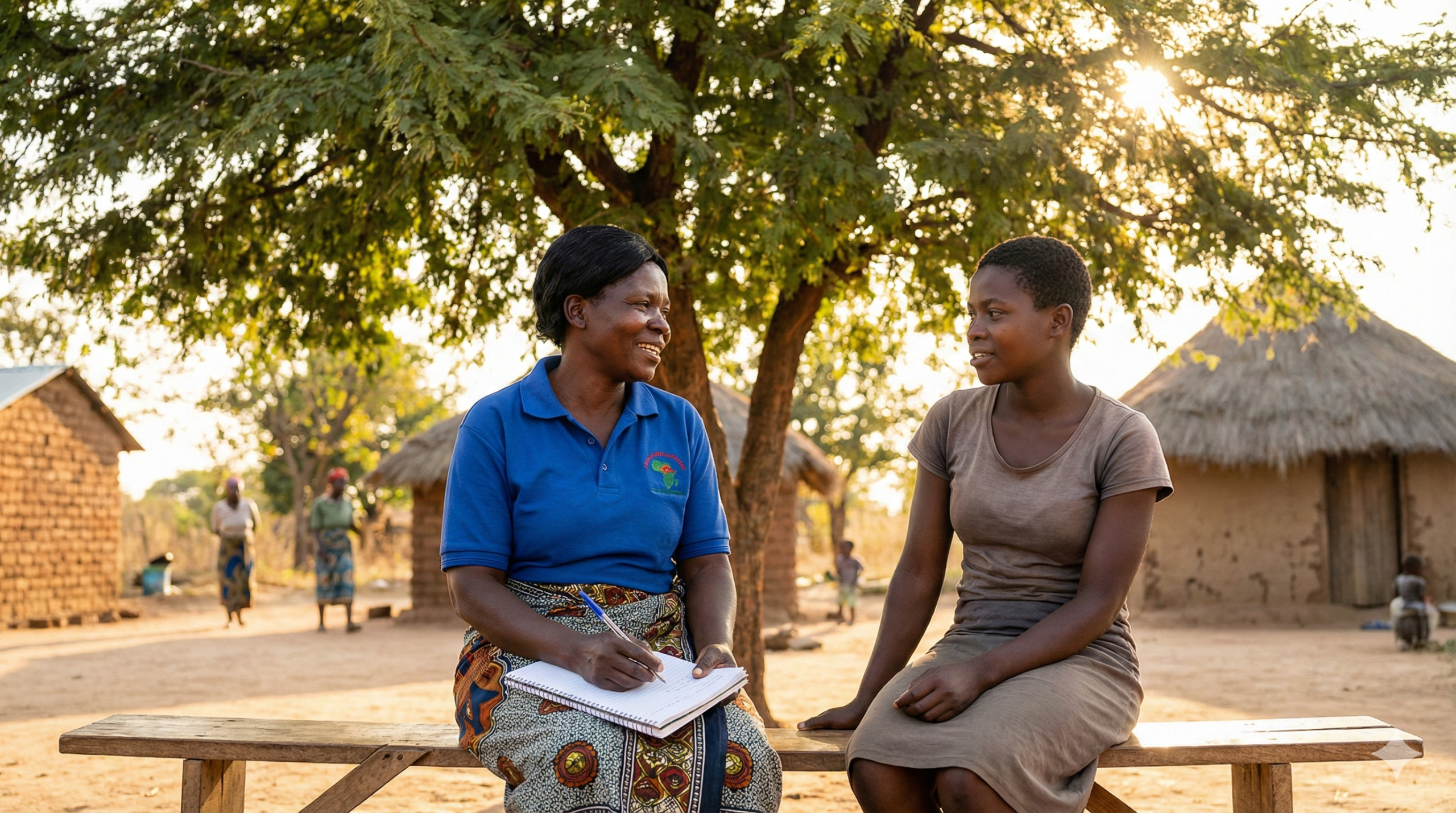
This strategy relies on the deployment of “Mentor Mothers.” These are not doctors or nurses. They are trusted women from within the community who are trained to act as bridges to the formal health system. They are neighbors, aunts, and peers who understand the specific cultural and social pressures that young women face in their daily lives.
Creating Safe Spaces A Mentor Mother does not wear a white coat. She meets her clients in safe, community-based spaces. These might be schools, church halls, or even under a tree in the village center. In these “Safe Spaces,” adolescents can talk openly about relationships, contraception, and HIV prevention without fear of stigma.
The Mentor Mothers are trained to provide comprehensive counseling and, crucially, to facilitate “warm handovers” to clinical facilities. They do not just tell a client to go to the hospital; they often walk with them, ensuring they navigate the intake process smoothly. This accompaniment removes the intimidation factor and drastically reduces the number of young women who drop out of care.
Measurable Impact: The Nchelenge Case Study The results of this community-led intervention have been undeniable. In the Nchelenge district, for example, our teams identified a significant gap in the uptake of PrEP (Pre-Exposure Prophylaxis) among the youth. PrEP is a highly effective daily pill that prevents HIV infection, but myths and misinformation were keeping uptake low.
Following the deployment of our Mentor Mothers, the district saw a surge in uptake. In just five months, the number of adolescents initiating PrEP jumped from 19 clients to 72 clients. This represents a massive increase in protection for a vulnerable population.
A Holistic Approach The program goes beyond HIV. It serves as an entry point for broader health services, including family planning, gender-based violence support, and economic empowerment. By integrating these services, we are treating the whole person rather than just a disease.
“We are building a safety net of trust,” explains our Program Director. When a young woman trusts her Mentor, she begins to trust the health system. That trust is the foundation of epidemic control. By empowering communities to lead the charge, CHZ is ensuring that the gains we make today will be sustained by the community leaders of tomorrow.
Strategic Focus: Discover how Coalition Health Zambia strengthens national capacity through our Health Systems & Supply Chain and Indigenous Prime Partnership.