Headline: Transforming adolescent health in Nchelenge: How Mentor Mothers Are Bridging the Gap Between Communities and Clinics
The Challenge of the Last Mile In the remote district of Nchelenge, the barrier to healthcare is often not just physical distance. It is social distance. For adolescents, and particularly for young women growing up in rural villages like Seketeni, the local health clinic can feel like a world away.
The barriers are invisible but formidable. Stigma surrounding sexual health, a lack of privacy in crowded waiting rooms, and the fear of judgment from older health staff often prevent young people from seeking the services they desperately need. Consequently, uptake of vital services like HIV prevention and Family Planning has historically remained low among this vulnerable demographic. The medicine was available on the shelves, but the clients were missing.
A Human Centered Intervention Coalition Health Zambia (CHZ) recognized that a clinical solution alone would not solve a social problem. Working under the USAID CHEKUP II mandate, we deployed a strategy built entirely on trust: the Mentor Mother Model.
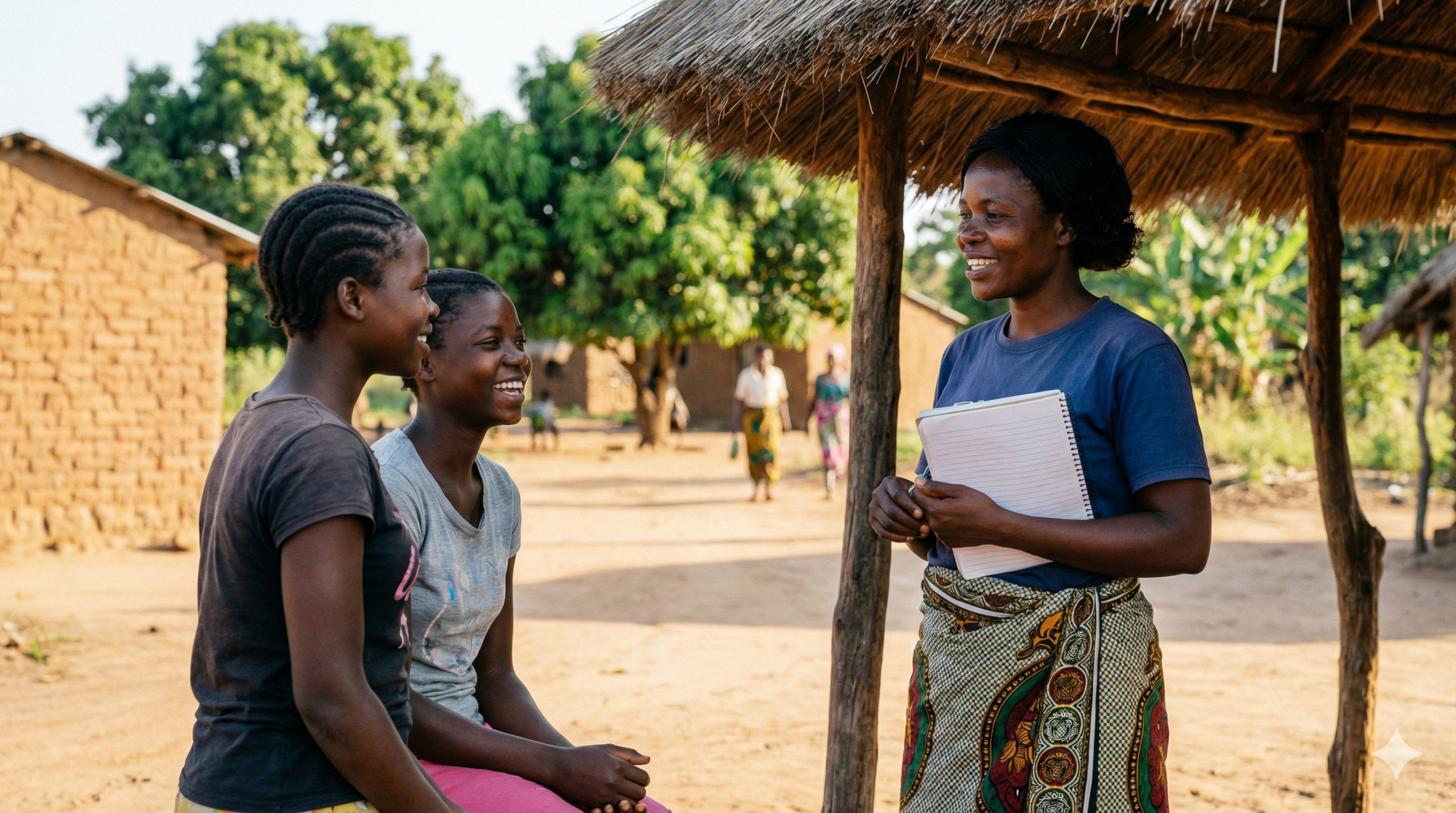
This approach acknowledges a simple truth. A young woman is far more likely to listen to a trusted neighbor or an “Auntie” than a stranger in a white coat. We identified and trained respected local women to act as “Mentor Mothers.” These women, such as Luni Tembo from Seketeni village, serve as the crucial bridge between the static health facility and the dynamic life of the community.
Building Bridges in Seketeni Luni Tembo does not wait for patients to come to her. She goes to them. As a Mentor Mother, she moves through her village with the confidence of an insider. She creates safe, confidential spaces where adolescent girls can ask questions they would be too afraid to ask in a formal setting.
Her role is multifaceted. She provides education on reproductive health, dispels myths about HIV prevention, and offers a sympathetic ear. Most importantly, she accompanies her mentees to the clinic. This simple act of walking a young woman to the health post removes the intimidation factor. It transforms a frightening medical appointment into a supported journey with a trusted guide.
The Data Tells the Story The impact of replacing fear with trust was immediate and measurable. At the Kambwali Rural Health Centre, the data paints a powerful picture of behavioral change.
Between January and May 2025, prior to the full scale-up of the intervention, only 19 adolescents had accessed PrEP (Pre-Exposure Prophylaxis). PrEP is a critical tool in ending the HIV epidemic, but uptake was stalling. However, after the Mentor Mothers began their community engagement in June, that number surged. By October, 72 adolescents were actively enrolled in the PrEP program. This represents a massive increase in protection for a high-risk group.
Similar success was recorded in Lushiba. In this catchment area, the number of family planning clients rose from 149 to 240 following the intervention. This increase signifies that nearly one hundred additional young women were empowered to take control of their reproductive choices and their futures.
Collaboration is Key The success of the model relies on a seamless partnership between the community mentors and the facility staff. The Mentor Mothers generate demand in the village, and the clinic staff provide the clinical service.
“This collaboration ensures adolescents get the support they need to make informed health choices,” says Daniel Mwape, a Peer Educator at the Lushiba Rural Health Post.
His observation highlights the synergy of the program. Before the Mentor Mothers arrived, the clinic struggled with limited resources and low youth engagement. Now, by working together, the facility and the community have seen remarkable progress.
A Safety Net for the Next Generation This project serves as a proof of concept for future rural health interventions. It demonstrates that while clinics provide the medicine, it is the community connection that ensures the medicine actually reaches the people who need it most.
By empowering local women like Luni to lead the charge, CHZ is doing more than improving health statistics. We are building a sustainable social safety net. We are creating a culture where young people feel seen, heard, and supported in their health decisions. In Nchelenge, the Mentor Mothers have proven that the most powerful tool in public health is often a trusted voice.