Jun 28, 2024
MOH-Led Issue Resolution
In creating WhatsApp groups for Zambia’s Ministry of Health (MOH) district and
health facility staff, the USAID Electronic Supply Chain Management Information
System (eSCMIS) project has showcased the strength of internal collaboration
among MOH staff in resolving issues related to eLMIS. Instead of relying solely on
external support from the USAID eSCMIS project help desk, MOH staff have
embraced a self-sufficient approach. Through the provincial eLMIS WhatsApp
groups, MOH staff have become each other’s go-to resource for assistance, marking
a significant shift in their ability to independently address eLMIS challenges.
The provincial eLMIS WhatsApp groups facilitate immediate communication and
have become vibrant virtual spaces where MOH staff connect, share insights, and
collaboratively troubleshoot eLMIS issues. This internal support network has
empowered MOH staff to rely on each other for timely and efficient issue
resolution. This shift signifies a newfound confidence and expertise among MOH
staff, who have, through collaborative efforts, become adept at navigating the
intricacies of the eLMIS system.
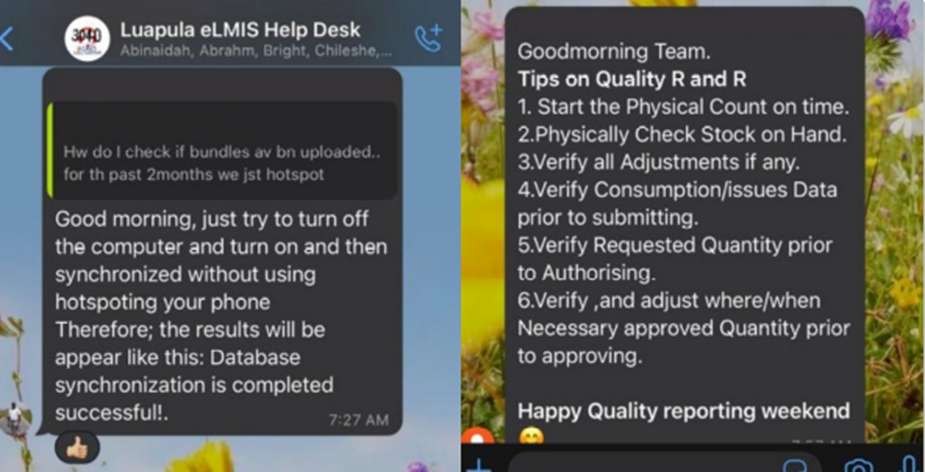
eLMIS users sharing troubleshooting tips and best practices in WhatsApp group
Gift Hapenga, who previously served as a Lab Manager at Mansa General Hospital,
is one of the active participants in the provincial WhatsApp groups. He shares that
he is able to provide assistance to his colleagues via WhatsApp due to the
knowledge he gained through orientation and training from the eSCMIS project. He
says: “The trainings I received from the project, combined with hands-on experience
through OJT and my keen interest, allowed me to identify gaps at the facility. I
ensured that health facility staff not only used the system but also used it correctly
and were able to troubleshoot issues and submit quality reports.”
Collective Learning Culture
The collaborative environment within the provincial eLMIS WhatsApp groups has
cultivated a culture of collective and continuous learning. MOH staff actively share
best practices, insights into effective system utilization, and tips for preparing high-
quality reports. This knowledge exchange has both strengthened individual
capacities and elevated the collective expertise of the MOH workforce in managing
eLMIS challenges and utilizing eLMIS-generated reports for decision-making and
overall improvement of data quality.
As Gift Hapenga emphasizes: “There are different people with different strengths and
experiences in the groups, so it gives an opportunity for the users to share and learn
from each other’s experiences. For example, a person may have experienced an
issue before and may know how to resolve it, so they can help peers without them
having to call the help desk.”
Reduced Reliance on External Support
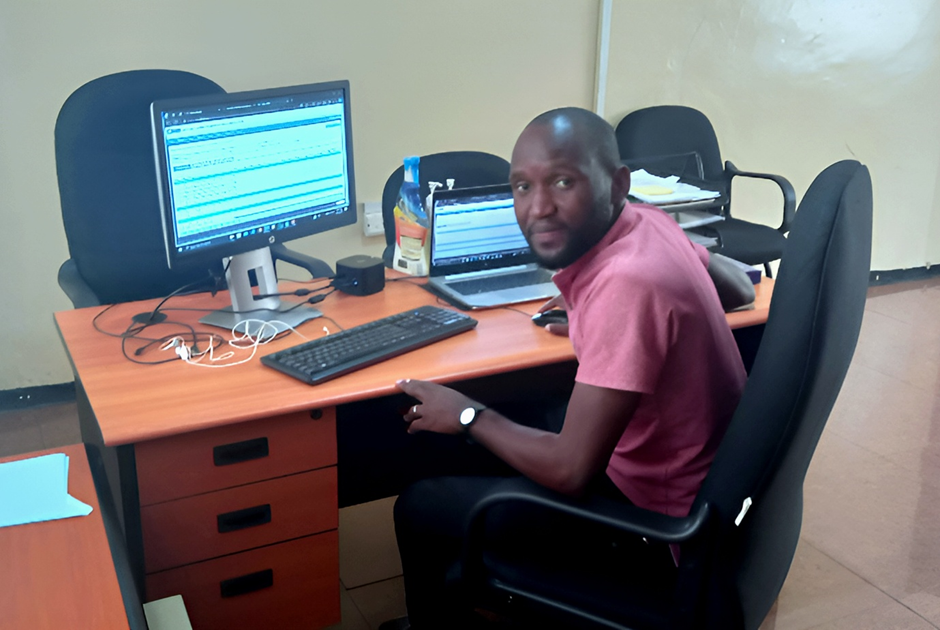
Gift Hapenga, Logistics Systems Strengthening Specialist
The success of the WhatsApp groups has led to a reduction in reliance on the
eSCMIS project for issue resolution. MOH staff, equipped with enhanced skills and
internal support, are now less dependent on external support from the eLMIS help
desk. This allows the eSCMIS project to focus on introducing broader system
enhancements and providing strategic support.
“The eLMIS help desk is sometimes congested, so being able to share issues
through the WhatsApp groups helps people get help quicker, as there are some
experienced people in the groups who help address issues,” Gift explains.
Impact on Health Facility Operations
MOH staff are committed to sustaining and enhancing their self-sufficiency in
managing eLMIS challenges. The empowered MOH staff have played a pivotal role
in improving operational efficiency. Timely issue resolution means uninterrupted
supply chain management, ensuring the availability of essential medical supplies.
Proficiency in report preparation contributes to data-driven decision-making, which
reinforces the MOH’s commitment to delivering quality health care services.
The provincial eLMIS WhatsApp groups serve as a model for others to cultivate
internal support networks, fostering a culture of continuous improvement and
knowledge sharing. By leveraging internal expertise and collaborative platforms,
MOH staff are moving away from relying on external support and becoming
empowered problem-solvers.