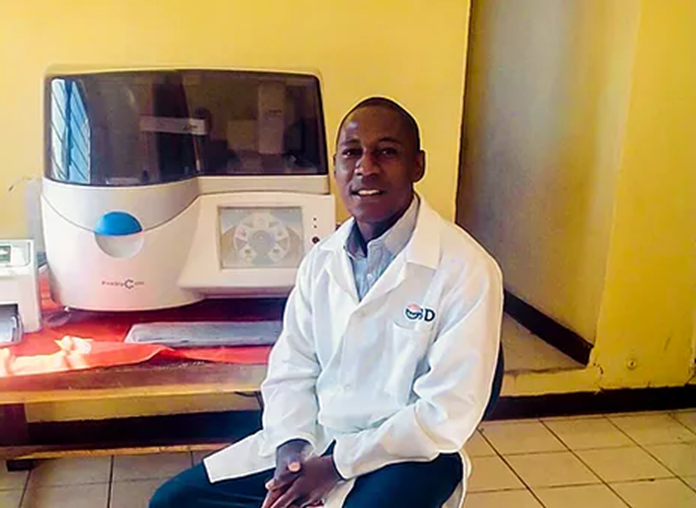
Moono Chilinda is a biomedical technologist from the Chama district in Muchinga province, Zambia. Moono owes his start in the electronic Logistics Management Information System (eLMIS) (eLMIS) to a Ministry of Health (MOH) apprenticeship dubbed the “buddy system” by the USAID Electronic Supply Chain MIS (eSCMIS) project.
Following the launch of the eLMIS Facility Edition (FE) in 2016, Moono began receiving eLMIS mentoring from his supervisors. Today, Moono is part of a growing group of eLMIS Superusers able to deploy and migrate the system, orient MOH staff to eLMIS, provide them with technical support, and, if the newcomers are lucky, mentor them to become Superusers themselves. The buddy system is a form of skills transfer that the USAID eSCMIS project uses to build capacity among MOH staff across Zambia. Most recently, the buddy system has enabled the project to expand and sustain its work through the many restrictions accompanying COVID-19.
eSCMIS is a USAID-funded project implemented by John Snow Health Zambia Limited (JSH), a JSI affiliate. In collaboration with the Ministry of Health (MOH), Medical Stores Limited (MSL), the Churches Association of Zambia (CHAZ), and other supply chain partners, eSCMIS is working to transform eLMIS into a sustainable, next-generation system that is wholly owned, implemented, and maintained by the government of Zambia. The eventual objective is a more efficient and sustainable supply chain, a more effective health system, and better health outcomes.
Through the buddy system, the project’s eLMIS Superusers provide less experienced MOH staff with technical support and identify new health facilities for future eLMIS deployment. “I’ve always had a keen interest in information technology,” reflects Moono. “I fully embraced eLMIS because of how efficient and timely it has made my work. With training from my supervisors, I began building my skills. I never imagined I’d become one of the first points of contact in both Eastern and Muchinga provinces on-eLMIS related queries, or that one day I’d be leading migrations or conducting virtual training to my MOH colleagues through a pandemic.”

In its first year of operation, eSCMIS trained 40 eLMIS Superusers to support and mentor other MOH staff and to deploy new versions of eLMIS. With support from the Superusers, 151 health facilities have migrated from eLMIS FE version 3.8 to 4.1.0. “We envision having at least on average two eLMIS Superusers in each district by the end of the project life,” reports Daison Machinyise, eSCMIS’s Systems Implementation and Support Manager. “COVID-19 really threw us in the deep end, but. . . we’ve managed to maintain reporting rates during the onset of COVID-19 till present, even with eSCMIS project staff not being able to travel to provinces for technical support. We can clearly see the Ministry’s commitment to eLMIS.”
The project design includes transferring full leadership of eLMIS to the government of Zambia by 2023, with project staff providing technical support for an additional two years. Building the capacity of MOH staff to implement and maintain eLMIS, including through the buddy system, is a key strategy for achieving this objective.
Evidence-based Decision Making for an Efficient Supply Chain
Apr 30, 2021
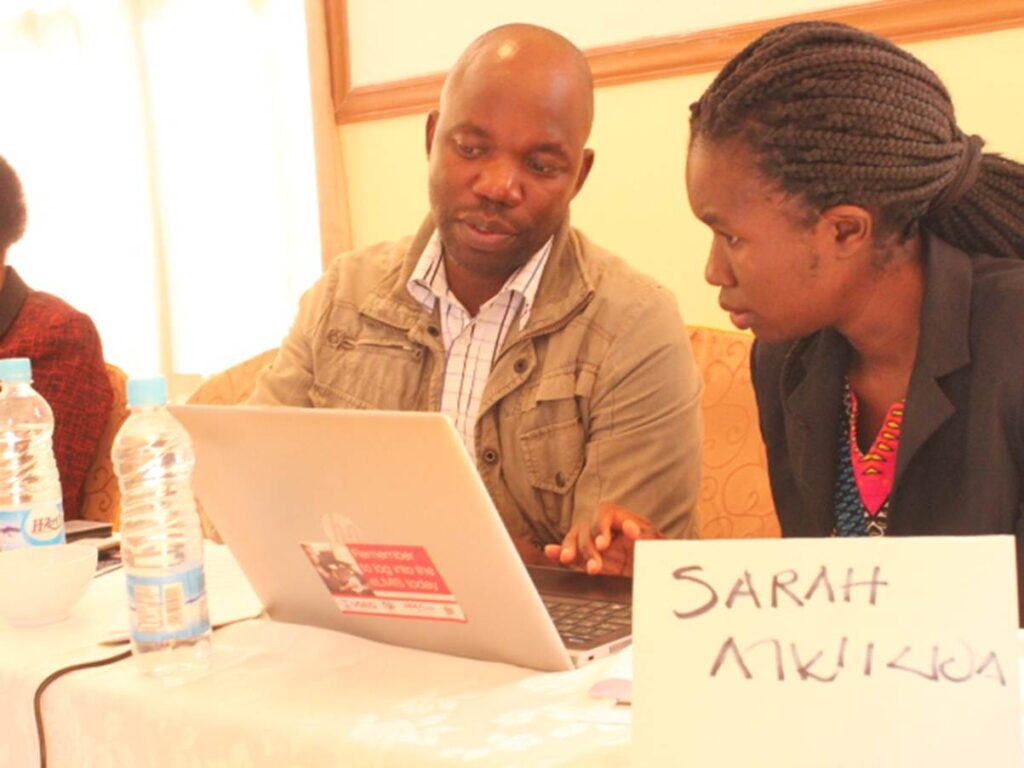
Zambia has made significant strides in establishing data-driven supply chain decision-making through the electronic logistics management information system (eLMIS). This software has been systematically implemented and collects high-quality data that is consumable at all levels of the health supply chain. These evidence-based decisions made by supply chain managers lead to action that aids strategic planning and clinical improvements. Easily accessible supply chain data has been able to bridge gaps between health facilities in commodity supply and help find local solutions for supply chain problems.
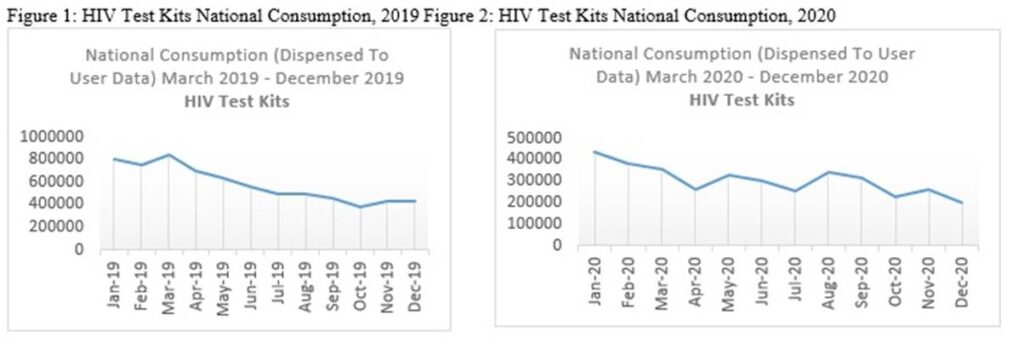
On March 12, Zambia celebrates Youth Day with musical performances, sports activities, workshops, and marches. Public health entities and advocates use holidays like Youth Day to raise awareness on issues such as gender-based violence, family planning, and HIV. This includes mass testing programs, which translate to a spike in the consumption of HIV-related health commodities such as test kits. “This has been a trend for years; the average monthly consumption for HIV-related commodities tends to be high in March. We see a large number of clients because of how many activities we tend to have during Youth Day. By observing data in the eLMIS, we have been able to forecast accurate consumption data based on patterns we’ve seen over the years,” says Mr. Lovely Soneka, a pharmacist from Boma Rural Health Center in the Mufumbwe district of North-Western Province, Zambia.
As shown in Figures 1 and 2, national consumption trends of HIV test kits have become predictable, aiding supply chain managers in data visualization for strategic planning. Readily available data are integral to making efficient health commodity supply chain decisions, without which commodity availability is unreliable and lifesaving drugs are wasted.
Easy access to accurate consumable supply chain data has been a key benefit of the eLMIS. The USAID eSCMIS project, implemented by JSH in collaboration with the Ministry of Health (MOH), Zambia Medicines and Medical Supplies Agency, John Snow Inc., and the Churches Association of Zambia, is tasked with eLMIS management, deployment, and sustainability. One of the project’s main objectives is to ensure the government can make data-driven supply chain decisions independently.